Glasses regeneration
per usato e vintageWhat is it and how we carry it out
Every vintage eyeglasses we offer is a used eyeglasses or NOS (new from old stock) restored and refurbished nour optical workshop-workshop. The first step is an initial assessment of whether or not glasses should be brought back to life, i.e. whether there are acceptable conditions for the object to still be used with satisfaction. So, con expertise and skill, we use Ultrasonic cleaning machines, hot or punching hinge pressing machines, welders, cutters, mini drills, eyewear control desks, vein and minute for glasses of all kinds. The result of so much experience and our professional equipment of the latest generation, is a pair of glasses brought back to the best possible conditions.
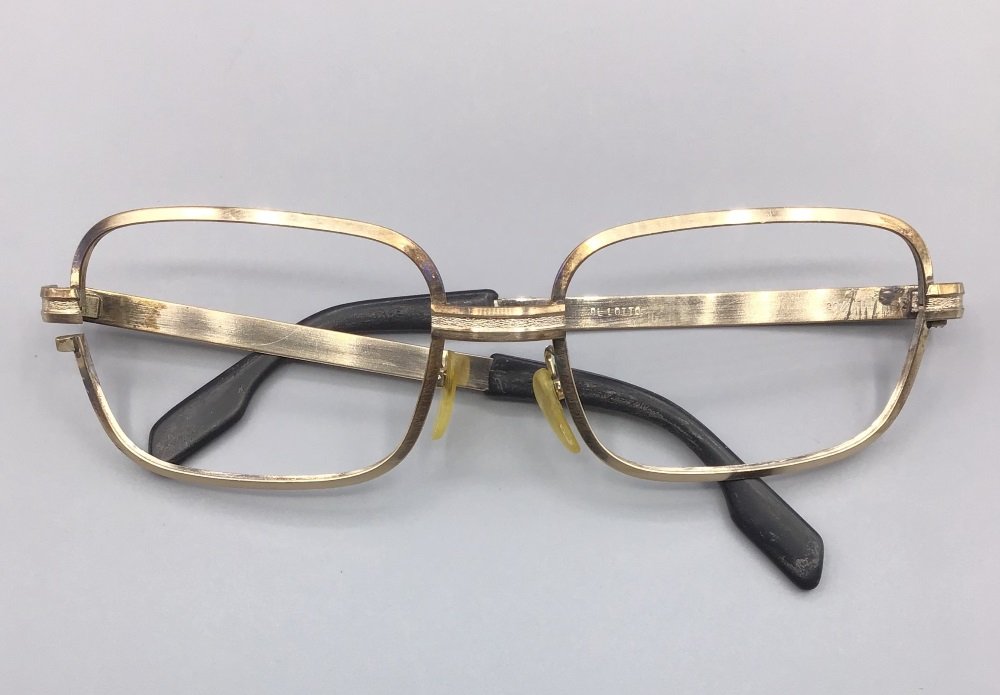
De Lotto, model 305 in 20/1000 k gold laminated metal from the 70’s
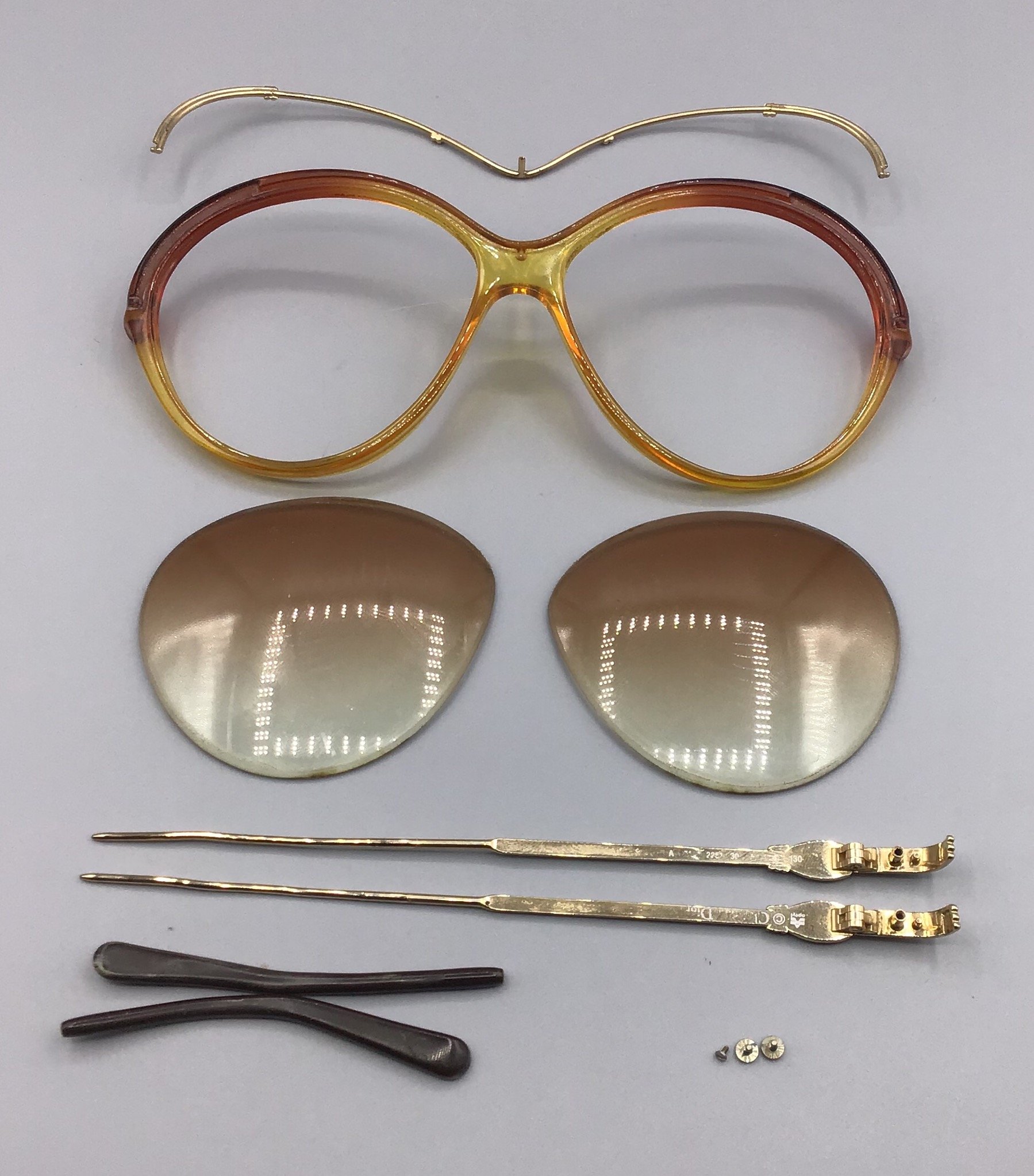
Step one: complete disassembly of the glasses; it is disassembled from the screws, separate the rods from the front, the terminals are removed, ie the plastic parts of the metal rods, are unscrewed or unhooked the plates of the noses, are removed the lenses present both from sight and solar and the glasses all so disassembled together with the screws is placed in a single basket ready for the second phase.
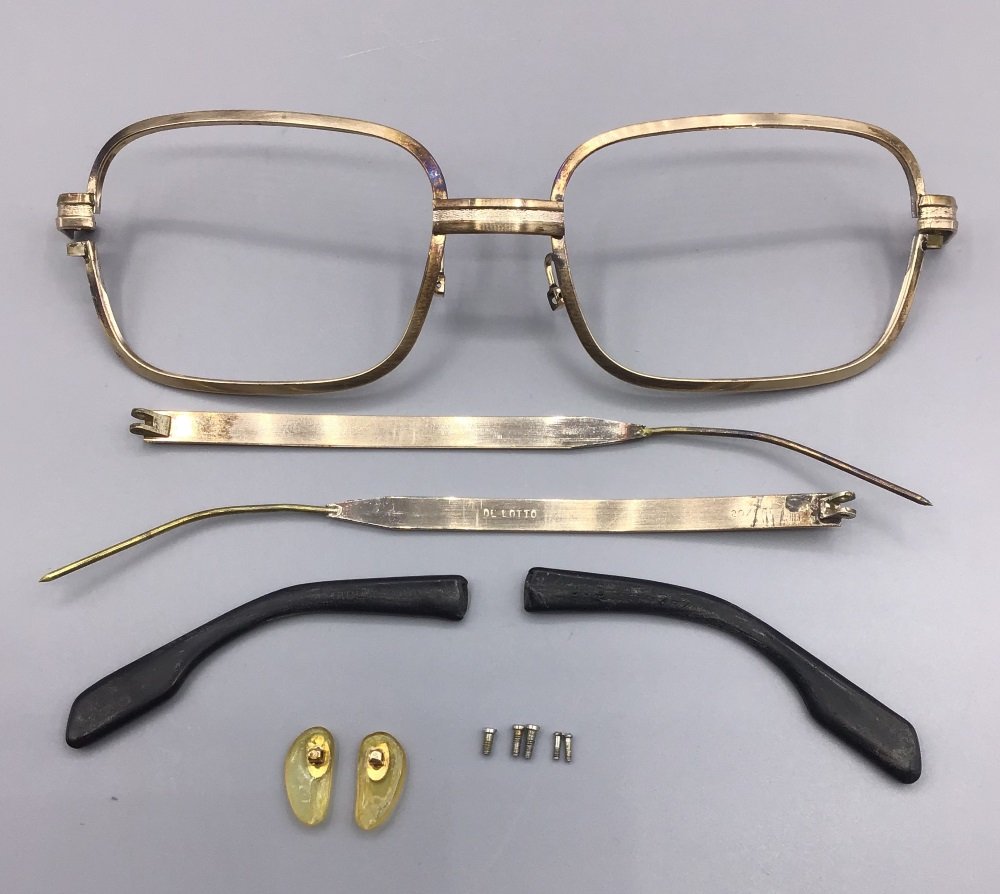
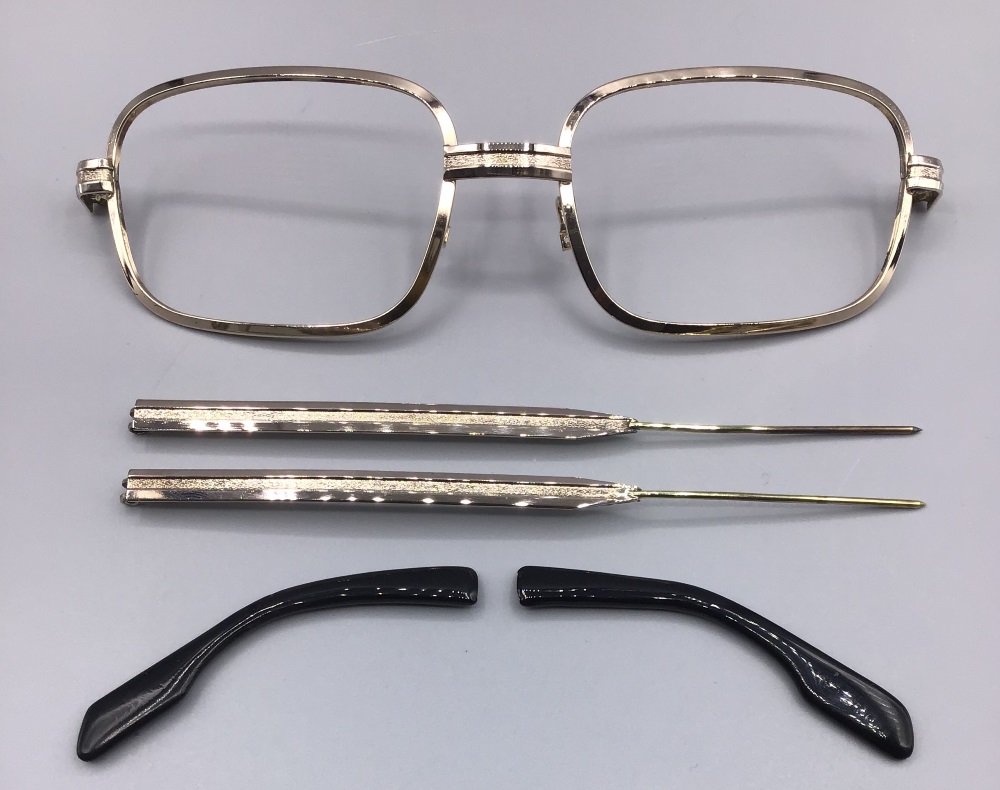
Step two: the glasses are washed in an ultrasonic cleaning machine following three steps in succession of which the first is a degreasing bath lasting 8 minutes, the second a cleansing and cleaning bath lasting always 8 minutes and a third sanitizing wash of the 16 minutes. At the end of this phase the glasses are restored to the best possible conditions, that is, both the plastic and acetate frames restore their brilliance, thus ensuring the hygiene of the object.
Step three: the processes here differ depending on the material and condition of the frame. Acetate or celluloid frames if they have opaqueness are re-polished with polishing machinery and products as they were at the time when they were created. For the metal frames, the conditions are evaluated and, if necessary, galvanized in gold/rodio/silver. At this stage it is important to assess the type of intervention to be carried out on the frame as, too invasive interventions could irreversibly compromise the materials that time and use may have made fragile.
It is also important to preserve the integrity of the object while maintaining some defects that do not affect its use but rather enhances its characteristics as an object of the past brought back to new life.
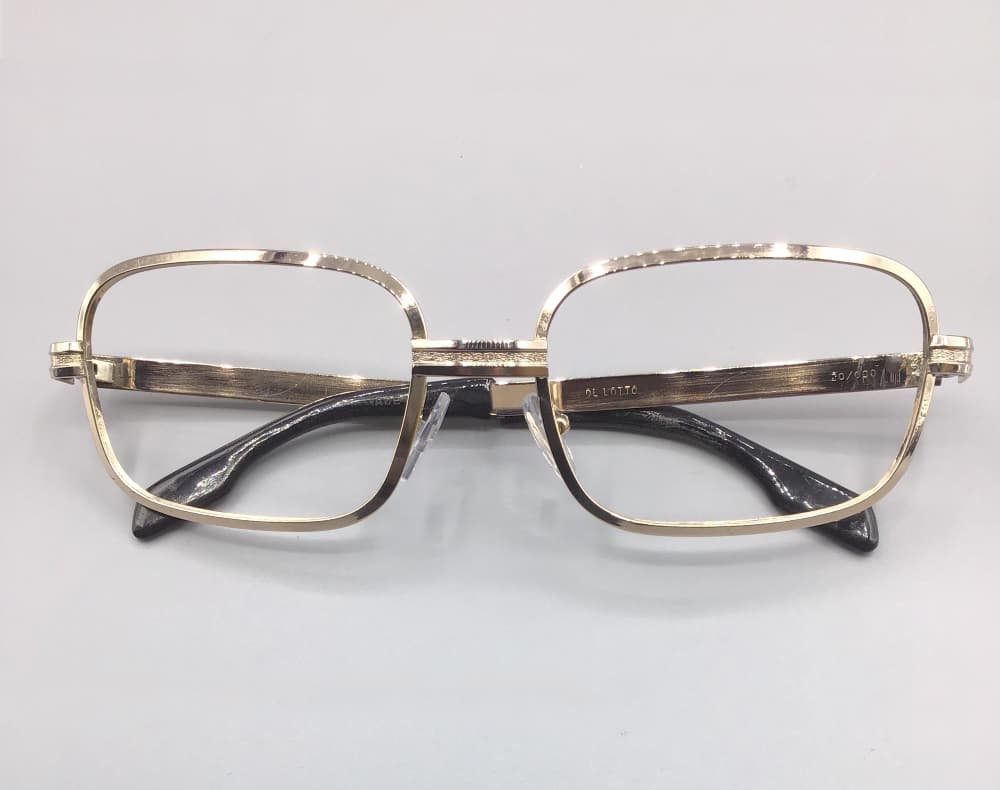
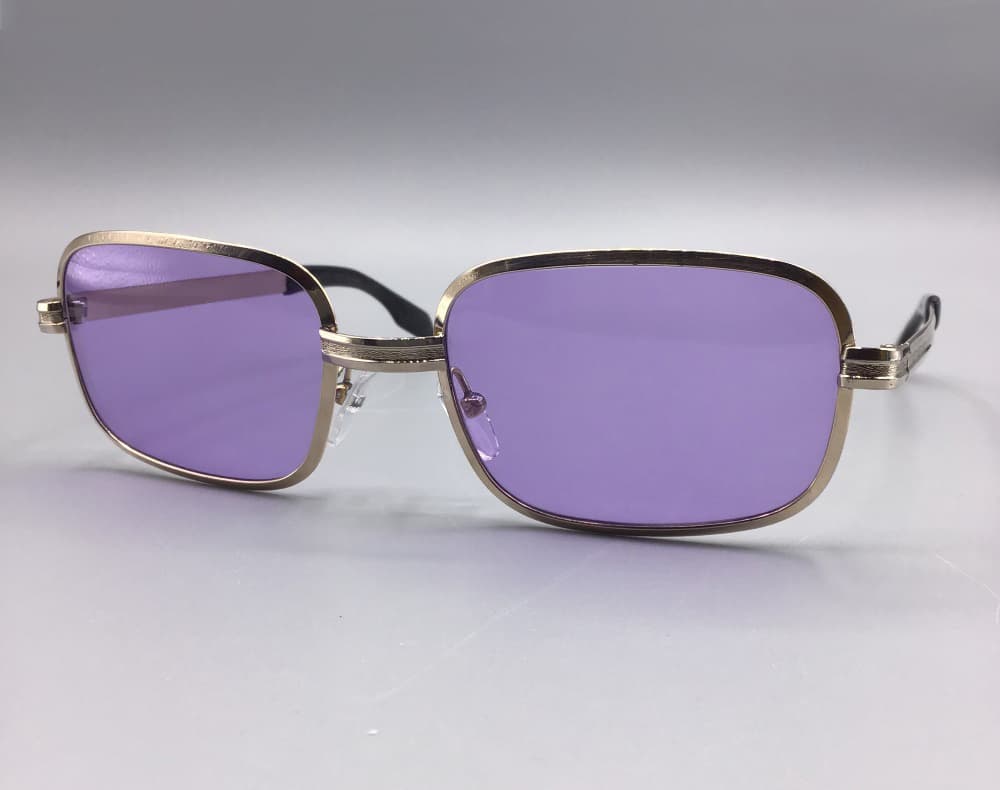
Step four: The eyeglasses at the end of this procedure is reassembled, possibly replacing the screw if the change is required, replacing the support plates and/or the ear support terminals with materials as much as possible similar to the originals of the time. It is eventually straightened and placed on the test bench in order to align and straighten the parts that do not appear in the correct trim.
L’occhiale così ricondizionato è pronto per essere indossato, conservato o collezionato dando così a questo oggetto del passato una seconda vita.
Modernization: modernization is a next step and an integration to regeneration. In fact, a eyeglasses that has already been regenerated is modernized. The modernization consists of the application of aesthetic or solar lenses of the latest generation with colors, mirrors, curvatures reminiscent of fashion and current trends.
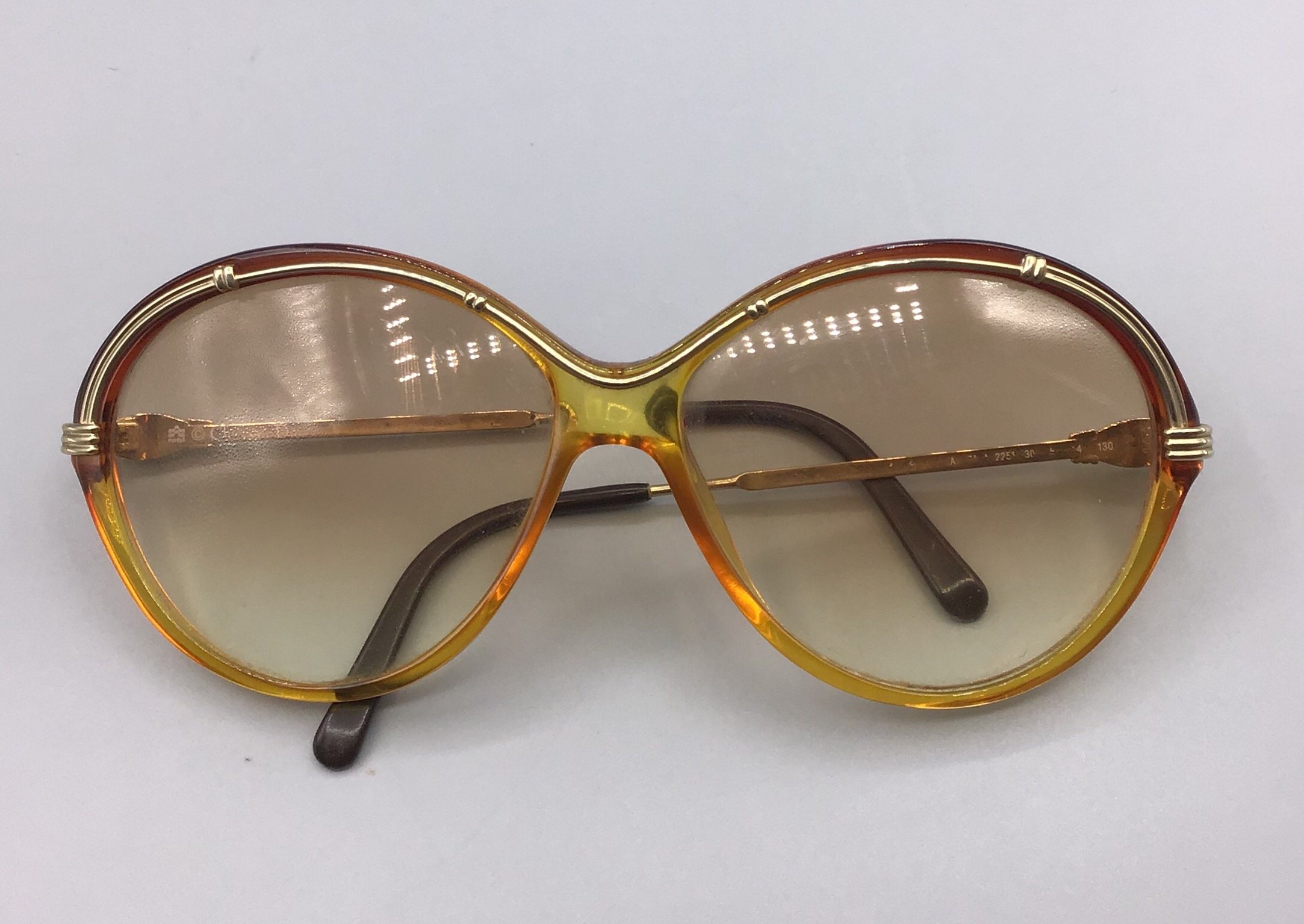
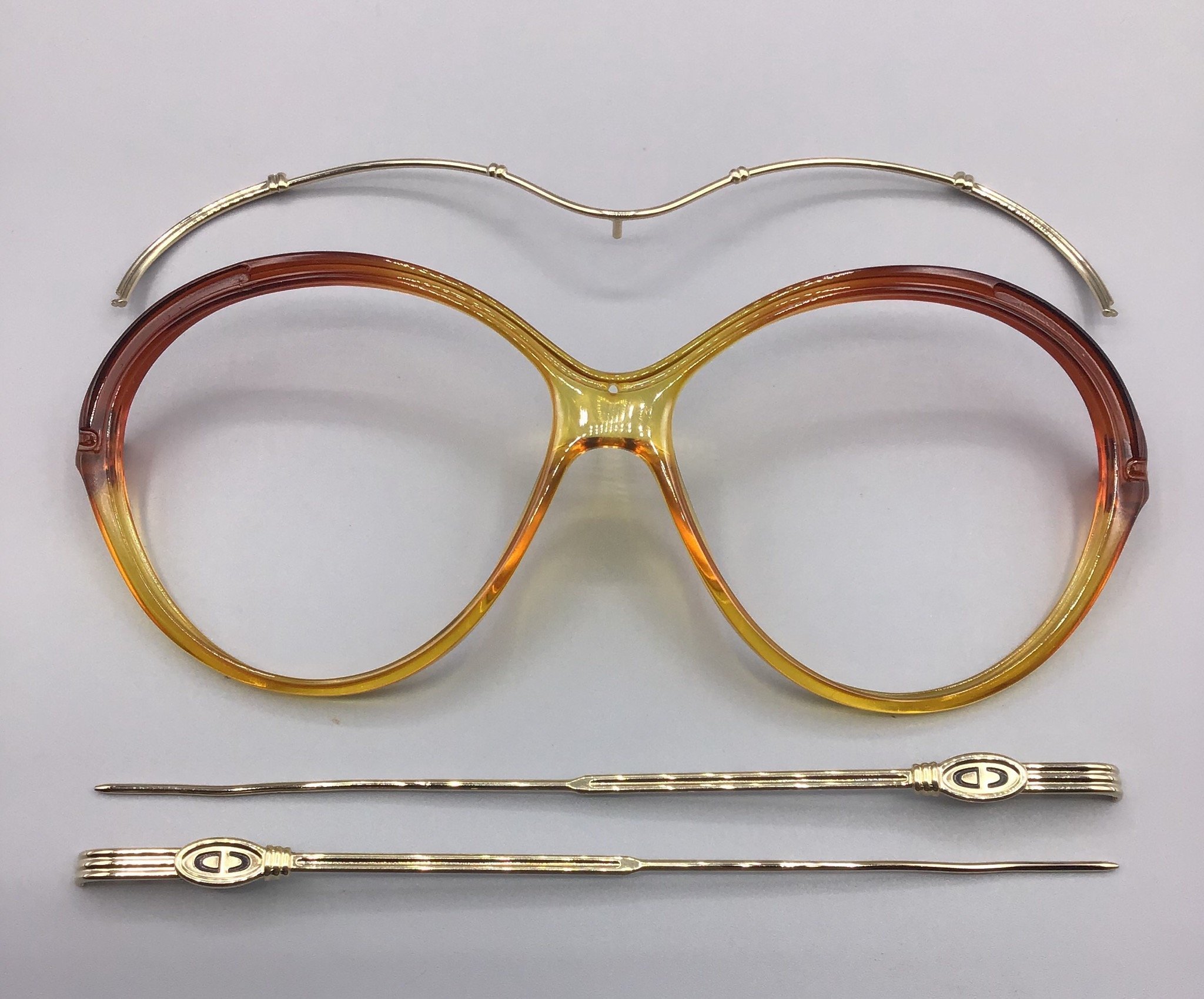
L’esempio che segue mostra un occhiale Christian Dior (modello numero 2251, in materiale Optyl, colore giallo-rosso), nel suo status iniziale e decomposto nei vari pezzi, prima dell’intervento di riammodernamento.
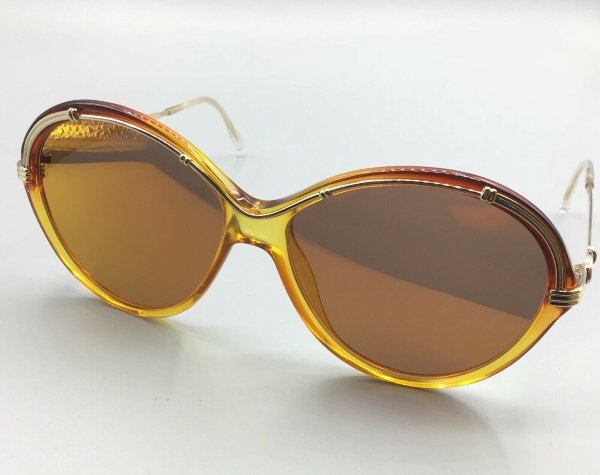
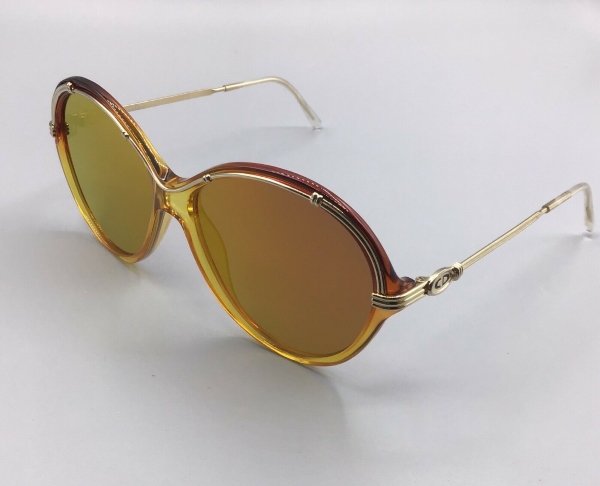
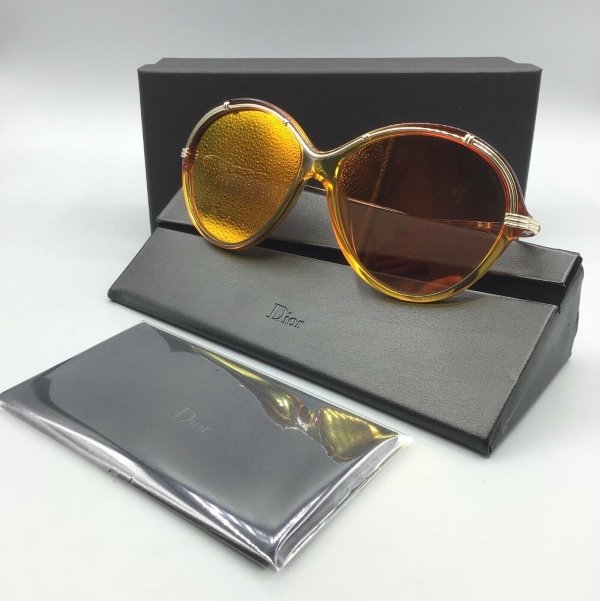
Nelle foto che seguono vediamo lo stesso occhiale dopo il suo riammodernamento con l’utilizzo di lenti specchiate color ambra.
Casi particolari: può succedere tuttavia di trovarsi di fronte ad occhiali le cui condizioni non permettano la loro rigenerazione. Let’s introduce you to some examples.
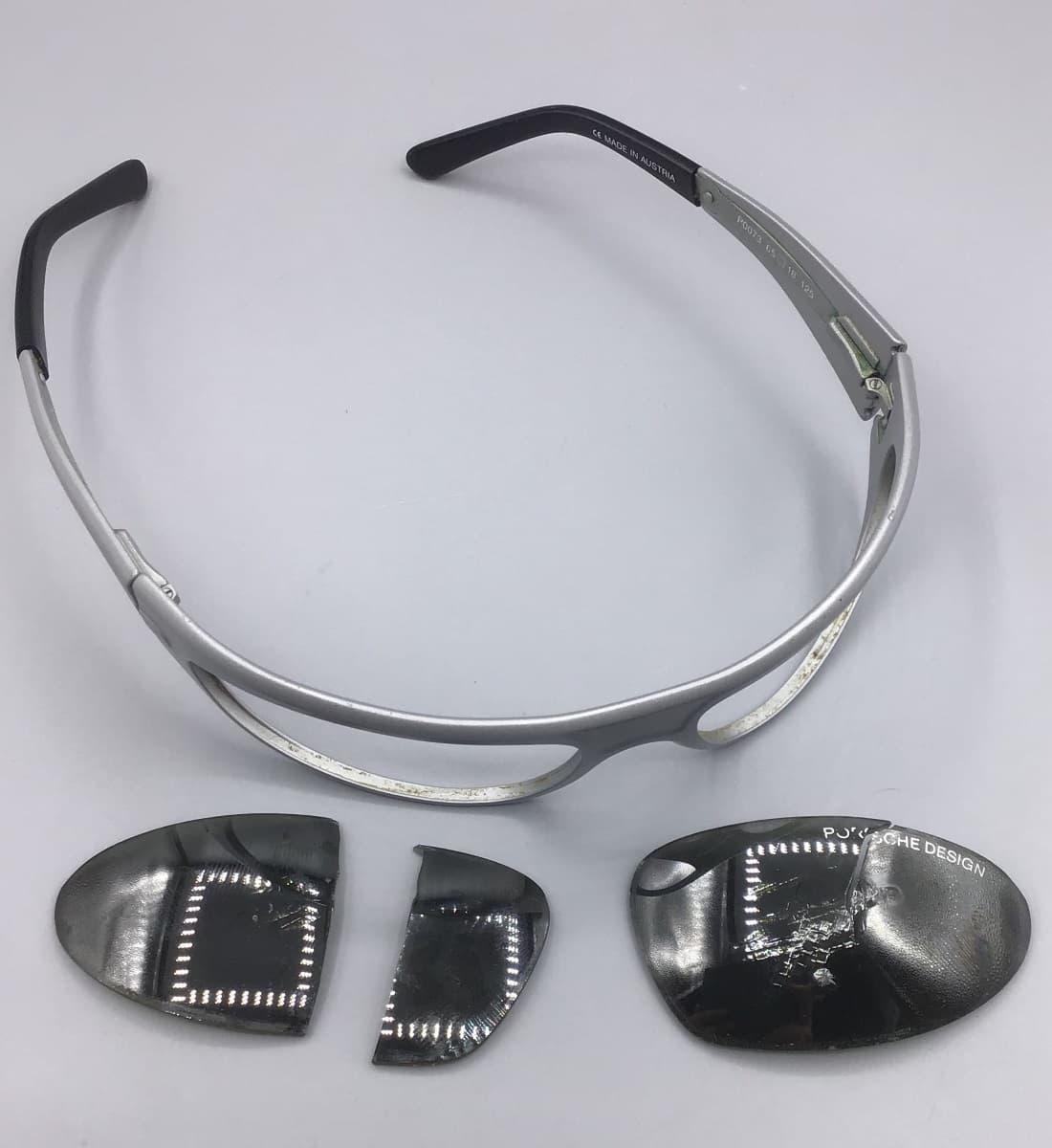
Questa foto rappresenta un occhiale che ha subito un incidente che ha provocato il danneggiamento di un’asta e la piegatura del frontale in alluminio non più raddrizzabile, oltre alla rottura dei filtri solari. Si tratta di un occhiale Porsche Design degli anni ’90.
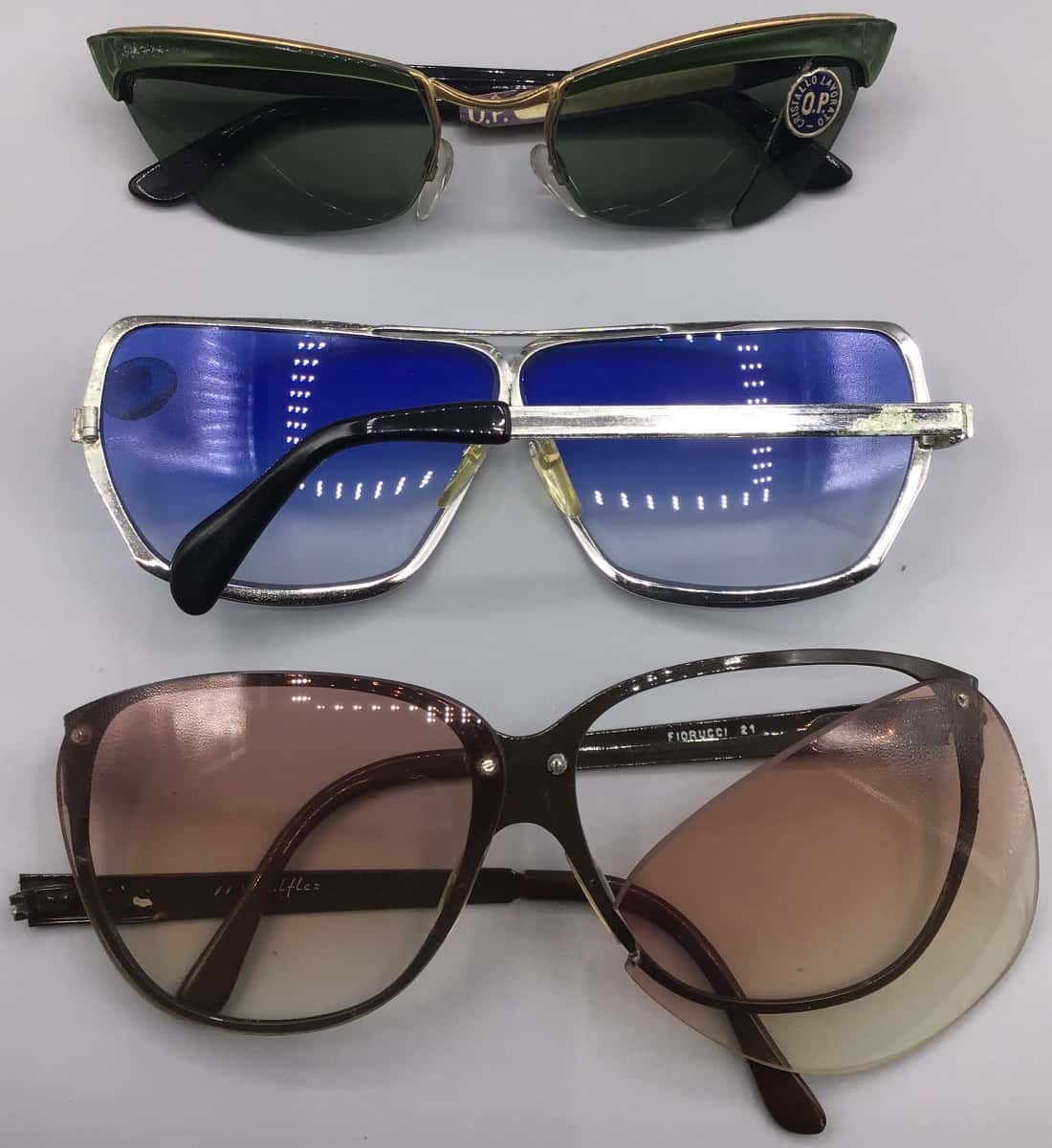
This photo shows three new glasses of old stock with different breaks on points no longer repairable. Unfortunately, the weather and poor storage have meant that even through repair operations they can not be restored for their use.
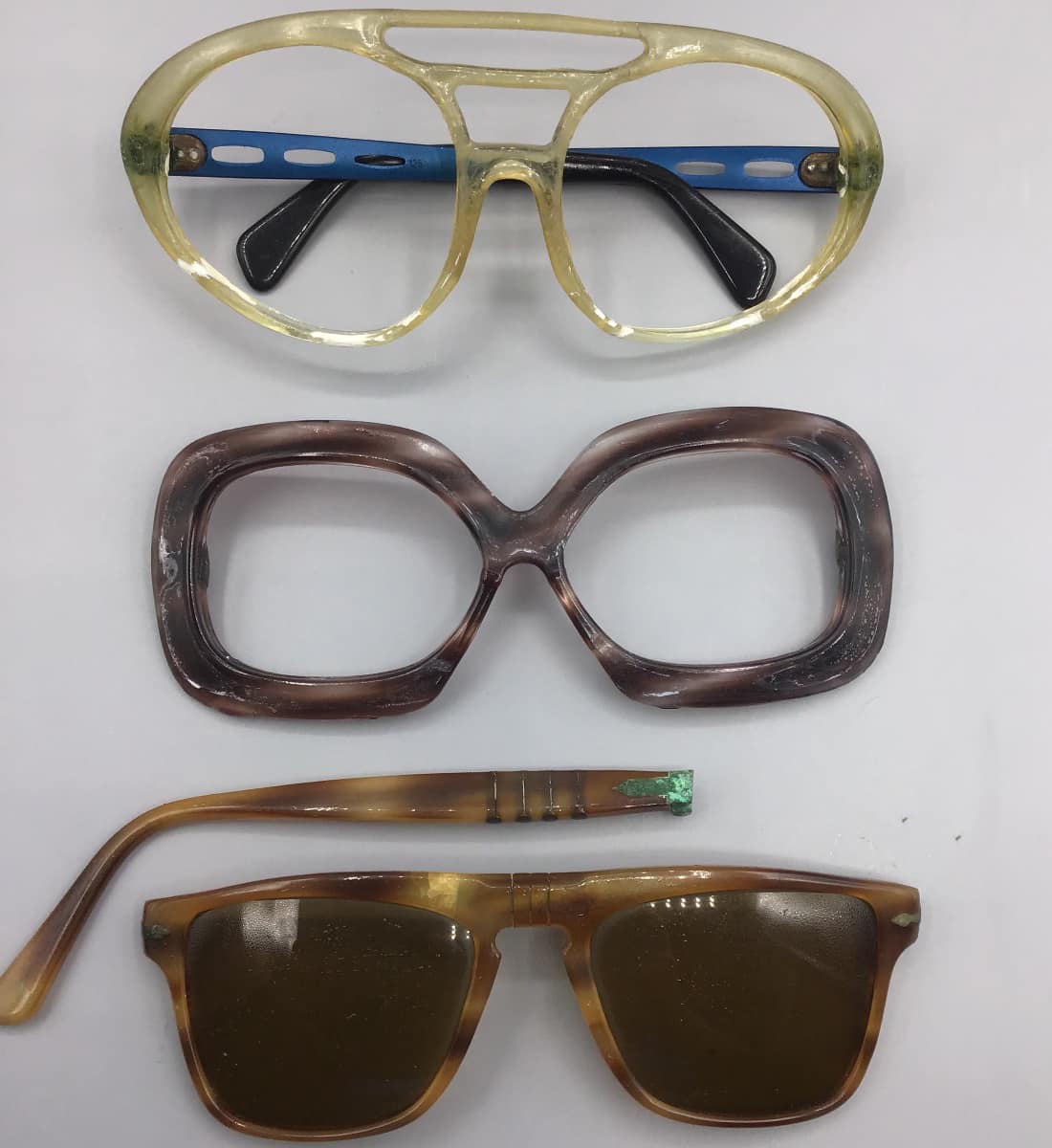
This photo represents three celluloid glasses and cellulose acetate that, due to incorrect storage temperature and/or humidity, have suffered a deterioration in the chemical composition of the material. Unfortunately this is too severe a condition for a possible restoration. You can see from the photo the change of color and yellowing in several places, as well as a withdrawal of the acetic component that causes a particular effect called crystallization of the material. This result is evident in the last bottom glasses that presents cliques in several places, as if the material were broken glass. In addition to this, there are various serious oxidations of brass parts.